 Epaper
Kathmandu, September 11, 2026: Glocal Private Limited, in collaboration with Times Higher Education, organized a webinar focused on the Times Higher Education Sustainability Impact Ratings 2027, bringing together more than 50 representatives from universities and higher education institutions across South Asia and the United Kingdom.
Titled “Achieving the Sustainable Development Goals in Higher Education: Bringing Nepal’s Higher Education Sector onto the World Stage,” the webinar explored how universities can demonstrate their contribution to the United Nations Sustainable Development Goals and strengthen their international visibility through global sustainability assessments.
The programme brought together government representatives, higher education leaders and international education stakeholders for discussions on sustainability, institutional impact, internationalization and the growing importance of global recognition for universities.
The government emphasizes international collaboration and Transnational Higher Education
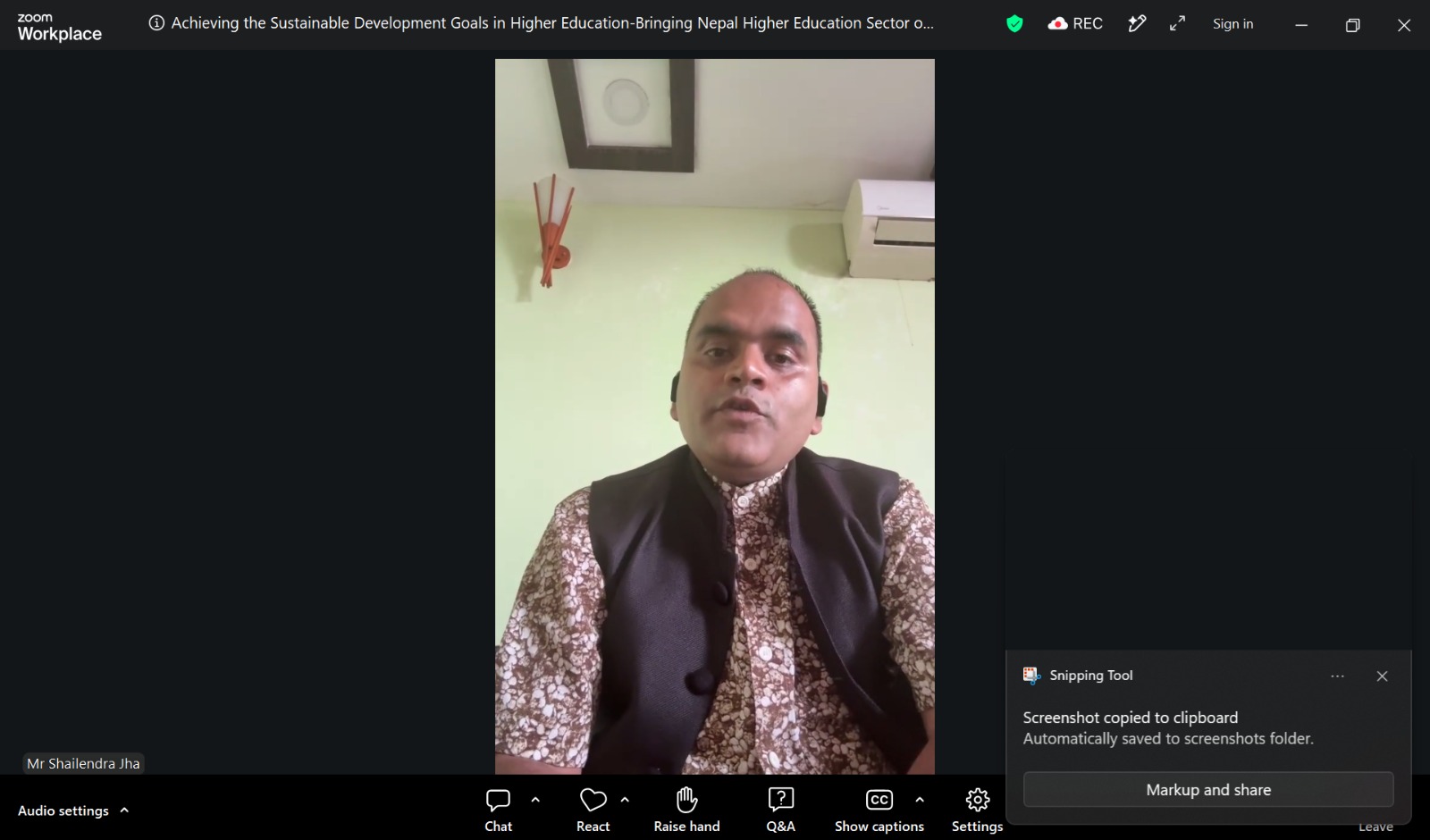
Sailendra Jha, Chief Advisor at the Ministry of Education and Sports, attended the webinar as the Guest of Honor and highlighted the importance of international collaboration in strengthening Nepal’s higher education sector.
In his remarks, Jha emphasized the need to build a more competitive and internationally connected higher education ecosystem in Nepal. He noted that greater engagement with international academic platforms can contribute to improving institutional quality, expanding global partnerships and increasing the international visibility of Nepali universities.
Jha also highlighted the government’s efforts toward developing an appropriate framework for Transnational Higher Education in Nepal. He explained that creating an enabling environment for collaboration between Nepali and foreign higher education institutions could open new opportunities for academic partnerships, knowledge exchange, and quality enhancement.
He further emphasized the importance of collaboration among government agencies, universities, international organizations and other stakeholders in advancing the internationalization of Nepal’s higher education sector.
Times Higher Education provides guidance on Sustainability Impact Ratings
Ritin Malhotra, General Manager and Senior Regional Director for Asia at Times Higher Education, provided participants with detailed information on the Sustainability Impact Ratings 2027 and the process through which institutions can participate.
Malhotra explained how universities can identify relevant institutional activities, organize supporting information and evidence, and demonstrate their contribution to the Sustainable Development Goals.
He also provided an overview of the participation and progress of Asian countries in the Sustainability Impact Ratings, offering participants a broader perspective on the region’s growing engagement with global sustainability initiatives.
The session emphasized that participation in the ratings goes beyond achieving a position in an international ranking. It can also help institutions evaluate their existing practices, identify areas for improvement, and systematically document their social, environmental, and economic contributions.
Glocal calls for greater participation from Nepali institutions
Ashish Thakur, President of Glocal Private Limited, encouraged universities and higher education institutions across Nepal to participate actively in the Times Higher Education Sustainability Impact Ratings.
Thakur highlighted that Nepali institutions are already contributing significantly through education, research, community engagement, innovation, sustainability initiatives and social development. However, he stressed the importance of documenting and presenting these contributions through internationally recognized platforms so that their impact can gain wider recognition.
He encouraged institutions to strengthen their systems for measuring and documenting institutional impact and to use global platforms to communicate their achievements to the international higher education community.
Thakur also reaffirmed Glocal’s commitment to supporting Nepali universities and educational institutions interested in participating in the Sustainability Impact Ratings. He stated that Glocal is prepared to assist institutions in understanding the participation process, preparing the necessary information, and effectively presenting their institutional achievements and impact.
Sustainability and evidence-based impact at the centre of discussion
The webinar also focused on the broader role of universities in advancing the Sustainable Development Goals through teaching, research, institutional operations, community engagement and partnerships.
Speakers emphasized that sustainability should be integrated into the wider functions and strategies of higher education institutions rather than being treated as an isolated initiative.
The importance of maintaining comprehensive institutional records and evidence was also highlighted. Proper documentation enables universities to demonstrate the outcomes of their initiatives, measure their progress, and communicate their contributions more effectively through international assessment frameworks.
Participants also discussed how global sustainability ratings can encourage institutions to review their existing practices, benchmark their performance against international peers, and identify opportunities for continuous improvement.
International participation strengthens knowledge exchange
With more than 50 participants joining from South Asia and the United Kingdom, the webinar provided an international platform for dialogue and knowledge sharing on sustainability and institutional impact in higher education.
The diverse participation enabled representatives from Nepal to gain insights into regional and international developments while exploring ways to strengthen the documentation and communication of their existing sustainability initiatives.
The programme also highlighted the increasing importance of international networks, benchmarking and recognized assessment frameworks in helping universities demonstrate their contributions to global development.
A step towards greater global visibility for Nepal’s higher education sector
The webinar concluded with a strong emphasis on encouraging greater participation by Nepali universities and higher education institutions in the Times Higher Education Sustainability Impact Ratings 2027 and future editions.
Nepali institutions are already engaged in a wide range of activities aligned with the Sustainable Development Goals, including education, research, innovation, environmental sustainability and community development. Increased participation in international sustainability assessments can provide these institutions with an opportunity to document their work, benchmark their progress, and showcase their impact to a global audience.
The discussions also reinforced the connection between Nepal’s broader efforts toward internationalization, including the development of Transnational Higher Education, and the growing importance of international benchmarks and global academic networks.
Glocal Private Limited reaffirmed its commitment to working closely with Nepali higher education institutions and supporting them in increasing their participation in international platforms.
The webinar marked an important step in strengthening dialogue around the internationalization of Nepal’s higher education sector and creating greater global recognition for the contributions and impact of Nepali universities.
प्रकाशित मिति : २०८३ भाद्र २८, आईतवार गते